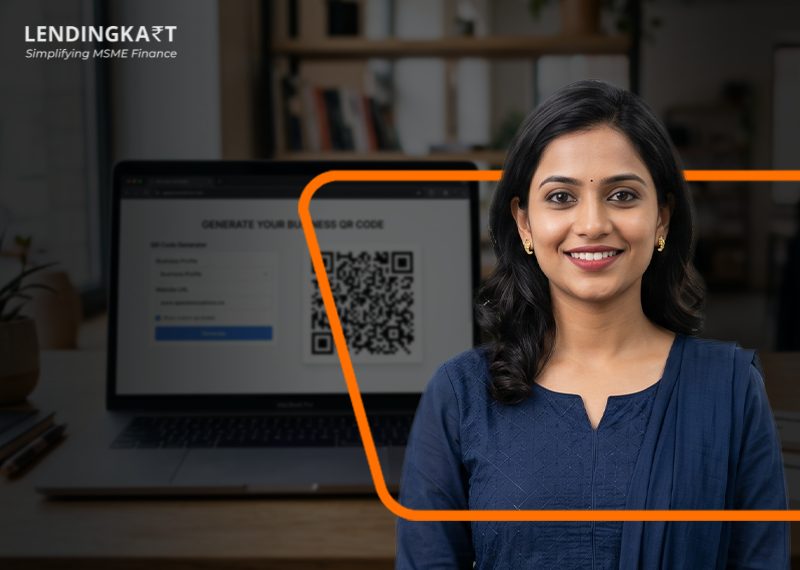
In today’s digital-first India, a simple black-and-white square has become the ultimate lifeblood of daily commerce. From local kirana shops to bustling street vendors, QR codes have completely transformed how small businesses accept payments and connect with customers. Here is your easy, step-by-step guide on how to get a business QR code in a matter of minutes if you’re ready to update your checkout counter and never miss a sale.
What is a Business QR code?
A Quick Response (QR) code is a Japanese innovation, a two-dimensional barcode that can be scanned by digital gadgets, such as smartphones and other mobile devices that have a camera and QR-scanning software. It can contain necessary information such as website URLs, payment details, product information, and contact details.
The QR code stores encoded data that is made to be scanned and is easy to manage, as it makes important information easily accessible. Most mobile phones have a built-in system to scan QR codes. In India, from small vendors to big companies, QR codes are used for payments, advertising, retail, exploring menus and whatnot.
Why Do Business Quick Response Codes Matter for Small Businesses in India?
The emergence of UPI has completely changed how small businesses conduct daily operations. Modern consumers naturally seek out a quick response code to complete their purchases in a matter of seconds; cash is no longer the preferred option. Using a specialised commercial QR payment system has several significant advantages for expanding businesses:
- Real-time Settlements: Money is transferred to your account instantly, safely, and directly.
- Minimised Cash Reliance: Lessens the risks of security issues, errors, and inconvenience that come with using paper money and physical change.
- Quick Checkouts: Significantly reduce wait times and maintain efficient checkout lines.
- Automated bookkeeping: Provides a seamless digital paper trail for every transaction while removing the headache of manual tracking.
- Frictionless Customer Experience: Offers customers the smooth, contemporary payment option they anticipate.
- Enhanced Professionalism: Indicates to your customers that your company is cutting-edge, reliable, and progressive.
What is the Difference Between the Types of QR Codes?
The main difference between the two types of QR codes, i.e., static and dynamic, is whether the data they encode is permanently locked or can be changed later.
| Features | Static | Dynamic |
| Data type | Stores fixed, unchangeable date | Stores variable, editable data |
| Editability | Cannot be modified after creation | Content can be updated anytime |
| How it works | The code directly incorporates data | Uses a special URL to redirect in order to retrieve current information |
| Best for | Website URLs, contact details, product info | Payments, event details, marketing campaigns |
| Real-time updates | Not supported | Supported |
| Flexibility | Limited flexibility | High flexibility |
| Ideal use case | Stable, long-term information | Frequently changing information |
What are the 5 Key Applications of Small Business QR Codes?
As consumers look for instantaneous, zero-friction ways to interact with local shopfronts, integrating smart scanning touchpoints across your operations bridges the gap between physical traffic and digital conversions.
- Contactless Menus: Diners instantly view live digital menus on their phones, allowing restaurants to update items in real-time without reprinting costs.
- Interactive Packaging: Retailers add digital depth to physical labels by linking to ingredient details, usage videos, or playlists.
- Hardware-Free Payments: Enables street vendors and boutiques to accept instant wallet scans directly without buying pricey credit card terminals.
- Frictionless Reviews: Speeds up feedback collection by routing customers straight to Google while they are still at the counter.
- Simplified Loyalty: Replaces traditional paper punch cards with instant digital sign-ups and tiered rewards.
How to Get a QR Code for a Business?
If you want to quickly digitise your shopfront checkout and unlock higher daily sales volumes, here is the exact step-by-step roadmap to establishing an authorised commercial payment system from scratch.
Step 1. Find Your Settlement Partner
Create an account through trusted payment processors nationwide. You can use standard business payment apps or commercial banking apps, with unified codes that accept payments from all transaction networks.
Step 2. Collect Your Documents
Keep these basic business records ready before starting:
- Tax ID: Personal PAN for sole traders, or corporate PAN for registered companies.
- Bank Details: A savings or checking account where your daily revenue will be directly credited.
- Shopfront Info: Your business address, trading category, and the mobile number linked to your bank.
- Sales Registration: A government sales tax certificate (GSTIN) if your annual revenue crosses standard local regulatory limits.
Step 3: Complete the Setup
The onboarding process is fully digital and takes only a few minutes:
- Download your preferred merchant app from your mobile app store.
- Log in with your mobile number and complete the secure verification.
- Link your bank account and submit your tax ID to complete identity verification. Your unique commercial code will go live instantly.
Step 4. Use Your Signage
Once active, you can display and share your secure payment code in two formats:
- Digital: Download the graphic directly to your phone to share via text, invoices, websites, or social media.
- Physical: Order an official counter standee or sticker through your app dashboard (typically delivered in a couple of weeks), or simply print the downloaded code yourself for immediate counter use
Read More: E-Invoicing for Small Businesses in India
Conclusion
Getting a business QR code is one of the simplest yet most impactful steps a small business can take to embrace digital payments. With minimal documentation, a linked bank account, and a few minutes of setup, you can start accepting instant UPI payments, improve the customer experience, and streamline your daily transactions.
As your business grows, you may also need additional funds to expand operations, purchase inventory, invest in technology, or manage working capital. That’s where a trusted lending partner like LendingKart can help. With quick digital loan approvals, flexible financing options, and minimal paperwork, we empower small businesses with the capital they need to grow confidently in India’s rapidly evolving digital economy.
FAQs
Q1. Which variant is the best for small enterprises?
Dynamic codes work better. They enable real-time content updates without the need for physical reprints and provide tracking analytics to monitor consumer engagement metrics.
Q2. How do fixed and editable variants differ?
Static codes directly incorporate permanent, unchangeable data into their pixel layout. By using a backend server redirect, dynamic codes enable you to instantly change destination links while keeping tracking features and scan limits unlocked.
Q3. Can I change the content after printing?
Only if you run a dynamic system. A seasonal discount link can be seamlessly replaced with a loyalty sign-up form behind the scenes, whereas static variations must be completely reprinted if data changes.
Q4. Are there any costs associated with creation and maintenance?
Basic static codes are completely free but limited in flexibility. Dynamic systems are typically subscription-based and ultimately reduce operational overhead by eliminating the need for continuous reprinting.
Q5. Why should commercial entities avoid personal accounts?
Using consumer-grade setups combines private funds and corporate revenue. This leads to disorganised financial records, complicates tax tracking, and lacks the necessary business automation tools.
Related Articles
Why Is Loan DSA A Great Business Opportunity In 2021-2022?
NBFC DSA RegistrationHow to get business loan for textile business
Difference between tin tan vat pan dsc and din
epf balance
form 15g
Fssai License
Business Ideas for Women
10 Business Ideas after Lock Down
Business Skills are Needed to Run Business
Business loan for women