Introduction
In India, the ecommerce industry is projected to grow at a CAGR of 21% and reach $325 billion by the year 2030 according to a report by Deloitte. As India looks forward to taking giant leaps and becoming a global economy, e-commerce is playing a vital role in this transition. Every business today has an e commerce strategy whether it is B2B or B2C. Riding on the wave of digitization, technology, increased consumer spending, and widespread availability of credit and numerous payment solutions, the e-commerce channel is bound to occupy a major share of business revenues in the coming decade.
The rise of e commerce has disrupted traditional business models such as brick-and-mortar stores. The key areas of business that have seen the ways of working getting turned upside down are customer experience, logistics, and market reach. An e commerce platform offers a virtually unlimited selection of products as opposed to a physical store with limited products. A customer can browse through the never-ending product assortment and choose the one that suits his needs. Some shopping platforms take customer experience to the next level by allowing customers to try the product virtually for products such as sunglasses and other accessories. Customers also can make use of an AI-enabled option to check how a television or a refrigerator align with the interiors of their homes. Numerous such features make the e-commerce buying process immersive and experiential. E-commerce has revolutionized the speed and scale of logistics and reverse logistics. A business or an MSME can use an e commerce platform to reach customers located in a different geography that ultimately results in an increased market coverage and revenue.
Micro, small, and medium enterprises (MSMEs) are tomorrow’s multinationals and therefore have a significant stake in the economic development of India. MSMEs are considered vital for the growth of an industry or a sector by the government. MSMEs are the shining beacons of entrepreneurship and stimulate the economy by creating employment opportunities. The MSME market in India is estimated to reach $1 trillion by 2028. MSMEs not only create a competitive environment for the global giants through their local market knowledge, but also contribute to the “Make In India” initiative. With the advent of digital ways of doing business such as online shopping platforms, MSMEs have positively embraced this wave of digitization and resorted to doing business the e commerce way. While the MSMEs that have embraced e commerce and digitization have seen a massive increase in revenue generation opportunities, the MSME sector as a whole is yet to leverage the power of b2b e commerce or b2c e commerce. Riding on the wave of electronic commerce is important for MSMEs to view e commerce as a boon rather than a bane. Let us understand the rise of e commerce, opportunities presented by e-commerce for MSMEs, challenges faced by MSMEs in e-commerce adoption, and government initiatives and support.
The Rise of E-commerce
Though the EDI (Electronic Data interchange) and Michael Aldrich’s teleshopping laid the groundwork for e commerce, the introduction of the World Wide Web in 1991 truly gave the required boost for e commerce business. Amazon and E-Bay survived the dotcom bubble and emerged as giant e commerce players in the global stage. The growth of e commerce was also aided by the growth of internet infrastructure in the form of web browsers such as Netscape Navigator and newer payment methods such as PayPal. Alibaba was a pioneer in the B2B e commerce space. The e commerce boom not only engulfed countries such as the US and China but also has spread to developing markets such as India, Brazil, and others driven by strong consumption-led growth stories. As per current forecasts, the global B2B e-commerce market is expected to reach $36 trillion by 2026 and the global B2C e-commerce market is projected to grow to $5.5 trillion by 2027. In the global B2B e-commerce space, the growth is led by industries such as healthcare, energy, and advanced manufacturing along with business services. Emerging economies such as Latin America and the Middle East show the fastest growth in B2B electronic commerce. When it comes to B2C e-commerce, the top categories contributing to the growth are consumer electronics, media & entertainment, fashion, hobby, toys, fashion, food and others. India, Argentina, and Brazil are among the leading nations contributing to B2C e-commerce growth.
A deep dive into the technological advancements that have enabled the growth of e-commerce will help you appreciate the evolution of the business model that has now become the de facto standard along with traditional retail. Michael Aldrich’s EDI could be thought of as a precursor to what modern ecommerce shopping looks like. EDI actually involved looping in a television that could serve as a platform for teleshopping advertisements to multiple computers that could function as devices for order confirmation and invoice generation. Since the product was advertised real-time and people ordered these on phone, this was referred to as teleshopping. All these happened during 1960 – 1982 When the World Wide Web was thrown open to the public in 1991, online shopping grew exponentially. However, it was not until a payments mechanism in the form of e-wallets such as PayPal that made e commerce payments truly real-time and seamless. There have been multiple technologies such as mobile commerce and contactless payments aided by the rising internet penetration that removed further friction from the e commerce shopping journey and enabled shopping on-the-go.
Along with technology, changing consumer expectations have also shaped the evolution of e commerce. As the proportion of city dwellers began increasing, time became a luxury. People looked forward to saving time on different aspects in their lives such as making the shopping trip, and visiting the pharmacy store among those. Convenience and comfort became the primary factors driving consumers’ buying decisions. Even then, consumers did not want to miss out on variety during their shopping and they wanted comparison between products to be seamlessly integrated into their shopping journey. These changes in consumer expectations created the perfect recipe for e commerce to prosper. E-commerce businesses also had to create trust with consumers and social media became a great tool to communicate with customers in an authentic manner. Online ratings and reviews by previous users of a product also started to factor in when a consumer made a purchase. Thus the shift in consumer preferences also led to the present e commerce boom.
Opportunities Presented by E-commerce for MSMEs
E commerce presents numerous opportunities for MSMEs as mentioned below –
- Increased customer base and revenue
MSMEs can easily avail of a small business loan, invest in setting up a digital storefront, and sell their products on an e commerce platform to anyone outside its physical reach, thereby removing location-specific limits on business. This helps MSMEs grow their brand names across the country and the world while serving customers from different geographies. For export orders, MSMEs can charge premium margins on their goods and services that further improves their profitability.
- Enhanced customer experience
Removing friction in the sales process and enabling a customer to get a product trial virtually removes many objections and barriers in the customer’s minds and aids in the decision making process. MSMEs can get funds from sme business loan and invest in technologies such as augmented reality and virtual reality that can help customers feel connected with the business.
- 24 x 7 business readiness
Hopping on to the e commerce bandwagon ensures that an MSME is business-ready every time. Since payment processing, order receipt, order confirmation, and dispatch can be automated, you do not need an employee to continuously monitor these business activities. E commerce model increases the operational working time for a business resulting in more orders and more revenue.
- Cost savings
If you are an MSME business owner who is just starting out, you do not need a physical warehouse or a retail outlet. You can start from your homes just by listing the products available with you on an e commerce platform. Though product listing on an aggregator’s platform involves listing fees, you do not have to invest a huge capital on buying or renting a physical outlet. As you grow your business, you can think of building your own e commerce platform.
- MSME-specific initiatives by the private sector
In India, Flipkart, Amazon, PayTM, and ShopClues had several initiatives for MSMEs in the past. “Samarth” by Flipkart promoted India’s handloom industry, weavers, and artisans by helping MSMEs handle storage and manage key accounts. Through this initiative, MSMEs could access the online e commerce space and showcase their expertise in Indian crafts. “MSME Accelerate” by Amazon helped MSMEs get bulk deals and discounts in order to recover from the loss of business due to the COVID-19 pandemic.
As you can see, e commerce, used in the right manner, can fuel the growth of an MSME business.
Challenges Faced by MSMEs in Adopting E-commerce
E-commerce adoption by MSMEs faces significant challenges due to the following points –
- Lack of digital literacy
MSME business owners may lack the necessary awareness and digital skills necessary for e commerce adoption. MSMEs in rural areas may not have access to high-speed internet infrastructure and supply chain facilities to keep their business ticking on shopping platforms. A reliance on cash payments may further hinder an MSME’s e-commerce adoption journey.
- Resource constraints
Being e commerce-ready involves expenses towards website development, listing fees, advertising, and logistics and not many MSMEs have the available funds. Being short on funds implies that they cannot hire industry professionals who are experts in the e commerce space.The business loan interest for a new MSME could be high if there is no established business credibility that further hinders MSMEs from going the e commerce route of doing business.
- Competition
Established giants can easily squeeze MSMEs by lowering product prices and driving them out of business. An e commerce platform removes friction for a consumer, but it also increases the ease of comparison of products on the basis of prices. Established market players can operate on lower levels of profitability while MSMEs cannot do so that forces them to do business traditionally.
- Cybersecurity
Since MSMEs are yet to establish a business history, some customers may not trust products and services from MSMEs. Also, MSMEs are more prone to cyberattacks because of less investments in keeping their security protocols and infrastructure updated to the latest standards.
- Regulatory issues
A business solely dependent on e commerce does not require a physical retail store. So, registering such a business can become a challenge because there is no principal place of business.
Government Initiatives and Support
Though several challenges abound for MSMEs in e commerce adoption, the government of India has stepped in and offered several initiatives and support. These initiatives can be broadly classified into two buckets – financial support, human capital support, and business facilitation support. For instance, the National Small Industries Corporation has schemes such as performance and credit rating, bank credit facilitations, raw material assistance, single point registration, infomediary services, marketing intelligence services lease, and bill discounting. The bill discounting scheme provides financial coverage for purchase or discounting of bills by MSMEs to reputed PSUs, Government Departments, and Government Undertakings at concessional rates of interest. The marketing intelligence services lease provides small businesses several databases on rate contracts in PSUs and government departments, bulk buyers, tenders, information technology vendors, international buyers, exporters, and market intelligence reports. The National Skill Certification & Monetary Reward scheme offers monetary rewards and promotes skill development among youths after completion of pre-approved training modules.
MSMEs can benefit greatly from e commerce if they utilize it in a prudent manner and scale their business appropriately. E commerce can definitely be a boon for MSMEs if they avail of initiatives by government and private sector that can help them attain digital literacy skills and make them e commerce ready!
Related Articles
 MSME LOAN BLOGS
Difference Between E-commerce and E-business
Learn how e-commerce differs from e-business in scope, operations, and digital presence to better align with your business goals.
 MSME LOAN BLOGS
What is B2C E-commerce?
Understand the B2C model, its components, and how businesses sell directly to consumers through digital platforms.
 MSME LOAN BLOGS
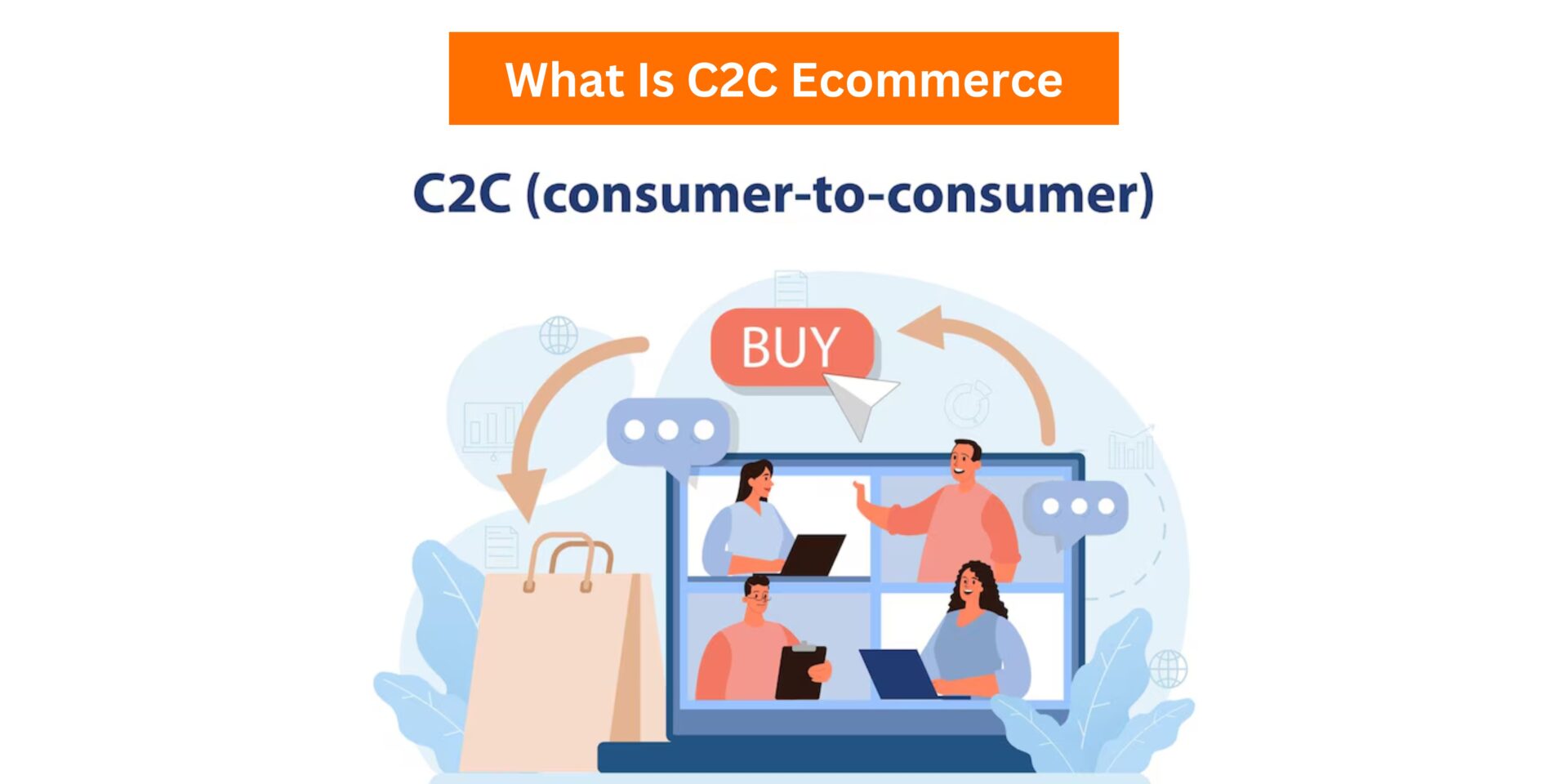
What is C2C E-commerce?
Dive into the customer-to-customer e-commerce model and how platforms like marketplaces enable peer-to-peer selling.