

A consistent flow of working capital is necessary to ensure smooth day-to-day operations, optimum liquidity, and seize growth opportunities. Working capital is essential in meeting outflow requirements like salaries, wages, raw material costs, utilities, etc. A deficit in working capital requirements can stall production, leading to business stagnation. To avoid this, companies can opt for various sources of working capital finance.
What is Working Capital Finance?
Working capital financing simply offers businesses with funds to meet their day-to-day operational expenses. This type of financing helps businesses pay for short-term obligations, maintain stability, and keep operations running smoothly. Such finance options are generally used to manage short-term cash flows rather than being used for long-term investments or asset purchases.
Use of Working Capital
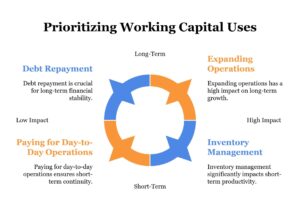
Working capital has utmost importance in operating a business and various use cases too. Following are some of the major uses and advantages of working capital :
- Paying for Day to day operations : Working capital can be of massive help to operate business efficiently. Working capital is essential to ensure that the day-to-day business is not disrupted. Having ample funding in place can help fund these expenses. If an entrepreneur is looking to avail funding, then short term sources of working capital can help pay for day to day operations.
- Inventory Management : Inventory is a critical part of any product based business. Managing it well can help an entrepreneur boost their business productivity remarkably. However, more often than not, the entrepreneur faces challenges of limited working capital, resulting in less than ample inventory at hand which can create issues during seasons of high demand. There are various sources of working capital that can help the entrepreneur maintain ample inventory to manage their business well.
- Accounts Receivable : India is a credit heavy market, most businesses work on heavy credits. Receiving payments against invoices on time can be crucial for the survival of business. However, more often than not, entrepreneurs find themselves in a position where there has been a delay in accounts receivable which in turn has a negative impact on the business operations.
- Debt repayment : Debt repayment on time is crucial for any business. Failing to make timely repayments can result in added penalties and a negative impact on the credit score. To tackle this, ample working capital can come in really handy! Having access to ample working capital can enable the entrepreneur to pay off the loans, essentially decreasing the liability on the business, and the associated cost of capital in the form of interest payments.
- Expanding Operations : Having access to funds can make an entrepreneur’s life very easy! Working capital can help in expanding operations, be it in the form of expanding into new locations, or expanding product lines. An entrepreneur can avail working capital loans to fund these expenses, which may have a long standing positive impact as business expansion can help in expanding revenue and subsequently profits too.
- Managing Seasonal Fluctuations : For businesses in markets dealing in products which have seasonal demand, having enough cash in reserves can help sail through the period of seasonal fluctuations in demand. These fluctuations can be both positive or negative. Imagine an instance where the business is seeing a massive surge in demand of the product, in such a case, the entrepreneur would require access to capital to fund increased inventory, similarly in cases where the demand has been less than anticipated, working capital can help fund business operations during lack of demand. In both cases, positive working capital can be of massive help to keep the business afloat!
- Investing in Sales & marketing : Sales and marketing are cornerstone to boost business revenue and visibility in the market, and can contribute massively in boosting business productivity. However, these efforts require significant investment in form of incentives and marketing expenses. In cases where the business does not have ample working capital in hand, in such cases the entrepreneur can explore various working capital sources, both long and short, to fund these expenses.
- Business Growth & Opportunities : Business growth requires a decent amount of working capital injection. It can be in the form of new investments in the company, financing, or sales growth. However, funding these expenses can be extremely difficult organically i.e. solely on the basis of revenue and business profits from operations. In such cases an entrepreneur may look for sources of finance for working capital as it can be extremely helpful in funding expenses related to business growth and finding new opportunities.
Short-Term Sources of Working Capital Finance
One may wonder – What are the possible sources of short term working capital?Short-term sources of working capital financing can be internal or external. In the short term, taxes and dividends can be classed as internal sources of working capital. While these are current liabilities, the funds remain with the company until payments are made. External sources include:
Short-Term Working Capital loans
Businesses, especially SMEs, can secure short-term working capital loans from banks and NBFCs at concessional interest rates. These are usual working capital loans granted for a shorter repayment tenure of up to 12 months. These can be secure/unsecured business loans, depending on the lender selected. Additionally, these loans come with flexible repayment terms, a digitised application process, minimal documentation, and easy eligibility criteria, making them hassle-free sources of operational liquidity financing.
Overdraft/Cash Credit
Banks extend their current account holders a pre-approved overdraft or cash credit limit facility. In other words, the individual can withdraw more than the funds available in the account. Since the bank charges interest only on the overdrawn sum, overdrafts remain one of the most cost-effective operational capital finance options for entrepreneurs looking to meet limited short-term expenses. The bank decides on the overdraft limit after evaluating the individual’s creditworthiness. These facilities are flexible sources of financing for businesses to manage short term capital requirements. It allows the entrepreneurs to access more capital with an increased convenience, enabling them to manage unforeseen expenses. The interest charges are applied only to the overdrawn amount, making it a great solution for managing liquidity.
Also Read: What is the difference between Cash Credit and Overdraft?
Account Receivable Financing
Account receivable financing is a short-term source of working capital finance where the company can use its accounts receivable as collateral to raise funds from a bank. The short-term loan granted against account receivables (unpaid invoices) generally accounts for 80% of the collateral value. Once the customer pays the invoice, you receive the rest, minus the lender’s fees. Since this type of short-term working capital finance involves the risk of customer defaults, it is good only if you have a reliable customer base.
Customer Advances
Acquiring advance payments from customers can be one of the easiest ways to secure working capital finance. Businesses insisting on advance payments, especially for bulk orders, can secure funds needed to improve cash flow and meet the short-term working capital requirements. Since no interest payments are involved, customer advances remain one of the most cost-effective sources of working capital financing in India.
Bill Discounting
Businesses sell goods and services to customers on credit, allowing deferred repayments over 30, 90, and sometimes 180 days. However, this deferred payment blocks cash inflows, creating a working capital crunch. Under bill discounting (invoice discounting), the bank purchases your unpaid sales invoices, due at a future date. The bank credits the due amount to the account after deducting a commission from the same. The bank collects the outstanding amount directly from the customer on the due date. Most lenders offer bill discounting facilities for up to 180 days.
Public Deposits
Businesses can also raise funds for short-term working capital requirements using public deposits. Companies invite employees, shareholders, and the general public to invest funds in the business, paying them a higher interest rate than bank deposits. Depositors earn higher interest rates than bank deposits, while companies benefit from a cheaper line of credit, making public deposits a mutually beneficial source of working capital finance.
Long-Term Sources of Working Capital Finance
Long term sources of working capital finance generally offer funding for day-to-day operational expenses and business growth and expansion. Again, these sources can be divided into internal and external options. Retained profits are an important internal source of operational capital for companies and one of the prime examples of working capital for the companies, while the following represent external sources:
Long-Term Loans
Long-term loans are a preferred source and one of the most mainstream long term source of working capital in India. Term loans in India come with a tenure of over 84 months and lower interest rates than short-term operational capital loans. Moreover, businesses can use these loans to fund their long-term growth plans, like upgrading equipment, expanding operations, etc. Since these loans are repaid in a fixed term with usually a fixed repayment, it becomes easier for the business to manage the expenses efficiently.
Equity Financing
Under this type of long-term working capital funding, businesses sell the company’s equity or ownership stakes to investors to raise capital. Equity funding can be obtained from different sources, including friends, venture capitalists, and the general public. The success of equity financing depends on factors like the company’s reputation, perceived profitability, and others.
Issue Debentures
Issuing debentures can be one of the best long-term sources of working capital finance for a company. Companies can issue debentures to raise capital from the general public, investors, and other companies. Unlike shares, the company has to announce the interest payable before issuing the debentures. Since this binding interest obligation holds even if the funds remain unutilised or the company runs into losses, issuing debentures can be a risky way of securing working capital finance.
Also Read: Term Loans: Definitions, Classification, Benefits & Eligibility
Conclusion
Assessing and understanding the different sources of working capital finance can help business owners carefully navigate their funding requirements. Working capital needs evolve, with different sources of working capital financing becoming appropriate at different times. Thus, companies need to constantly evaluate their funding needs and choose the right sources of working capital finance to ensure profitability while managing short-term and long-term cash flows.
Frequently Asked Questions
What are the Most Common Types of Working Capital Finance Options in India?
Short-term working capital loans, overdrafts, bill discounting, and accounts receivable funding are some of India’s most common working capital financing options.
Can I Get a Working Capital Loan without Collateral?
Yes. You may be eligible for an unsecured working capital loan depending on the lender you pick, your credit score, and business profitability.
What are the Primary Sources of Working Capital Finance?
Internal and external sources are two primary sources of working capital finance in the short and long term.
How Much Can I Use from my Overdraft Account to Fund Working Capital Requirements?
The bank determines the overdraft limit on your current account based on your creditworthiness. Lenders evaluate your CIBIL score, financial history, and repayment track record.