Despite electronic fund transfers gaining massive traction in recent years, cheques continue to be a popular instrument for B2B payments and high-value transactions. However, a simple signature mismatch or a miscalculation of account balance can turn a routine payment into a legal nightmare.
Exercising caution when issuing cheques is important to avoid the risk of them being returned unpaid. According to the Negotiable Instruments Act of 1881, a cheque bounce is not just a clerical error; it is a criminal offence.
In this blog, we will explore the cheque dishonoured meaning, the penalties involved, and the strict legal timelines you must adhere to if you find yourself in this situation.
What is a Cheque Bounce?
A cheque bounce, legally referred to as a “dishonour of cheque”, occurs when a bank declines to process a cheque presented for payment. Instead of transferring the funds to the payee (the person supposed to receive the money), the bank returns the cheque to the depositor along with a “Cheque Return Memo”.
To understand the full cheque dishonoured meaning, one must look at the Return Memo. This document clearly states the specific reason for the rejection, which is vital for any future legal action.
What are the Common Reasons for Cheque Bounce?
Many people wonder, “what happens if cheque bounces?” The immediate result depends largely on why it happened. Here is a quick overview of the most common causes:
Insufficient Balance
One of the most prevalent reasons for a cheque bounce is due to insufficient funds in the issuer’s bank account. If your account balance is not enough to cover the amount written on a cheque you issued, the bank will dishonour your cheque.
Signature Mismatch
If the signature on the cheque does not match the signature recorded in your bank’s system, the cheque will be dishonoured.
Incorrect Details
If you make even a minor error or enter an incorrect detail on the cheque, your bank can decline to process it and may send a cheque return memo citing the reason. Some of the most common errors include incorrect dates, mismatched amounts in words and figures or a mismatch in the payee’s name.
Stale or Post-Dated Cheque
A cheque is valid only for three months from the date of issue. A cheque that has outlived its validity is termed a stale cheque. Presenting a stale cheque can lead to it being dishonoured by your bank.
A post-dated cheque, meanwhile, has a date that is later than the date of issue. Presenting a post-dated cheque before its valid date can also be rejected by the bank.
Account Closure or Frozen Account
The bank may also dishonour the cheque if the issuer’s account is closed or frozen due to regulatory or legal reasons.
Overwriting or Alteration on the Cheque
Another very common reason for cheque bounce is overwriting or alteration. If the cheque is overwritten or altered in any way, the bank may decline to process it due to security concerns.
Payment Stopped by the Issuer
If the issuer instructs their bank to stop the payment after issuing a cheque, it will be immediately dishonoured when presented.
Legal Implications of Cheque Bounce
A bounced cheque due to “insufficient funds” falls under Section 138 of the Negotiable Instruments Act, 1881. This section treats the dishonour of cheques as a criminal offence.
However, certain conditions must first be met before initiating legal action. After understanding the cheque dishonoured meaning, here is a quick overview of what they are.
- If a cheque bounces, the payee must issue a cheque bounce notice to the payer within 30 days from the date of bank intimation.
- The issuer has 15 days from the date of receiving the cheque bounce notice to pay the amount to the payee.
- If the issuer has not paid the cheque amount within the stipulated 15 days, the payee can file a cheque bounce case.
- The payee must file a suit against the issuer with a magistrate within 30 days from the date of expiry of the 15-day time period.
If the court holds the issuer guilty, the following punishments can be awarded:
- Imprisonment: A jail term extending up to two years.
- Fine: A monetary penalty which may extend to twice the amount of the cheque.
- Both: A combination of imprisonment and fine.
What are the Fees and Penalties Associated with Cheque Bounce?
When a cheque bounces for any of the reasons mentioned above, both the issuer and the payee may be penalised by their respective banks.
The cheque bounce penalty can vary based on the type of account, the account holder, the cheque amount and the bank’s policies. The bank fees can range anywhere from ₹50 to ₹1,000. In addition to the cheque bounce penalty, the bank will also levy GST.
Steps to Take When a Cheque Bounces
If you are a payee dealing with a defaulter, understanding the cheque bounce case process is vital to recovering your dues. The law requires you to follow a very specific timeline.
The Demand Notice
Once the cheque has bounced, the payee must send a legal notice (Demand Notice) to the issuer within 30 days of receiving the Cheque Return Memo from the bank. This notice must demand the payment of the cheque amount.
The 15-Day Window
The issuer is legally granted 15 days from the receipt of the notice to settle the payment. If the issuer pays within this period, no legal action can be taken.
Filing the Complaint
This is where the cheque bounce case time limit becomes critical. If the issuer fails to pay within the 15-day window, the cause of action arises. The payee must file a criminal complaint before the Magistrate within 30 days from the expiry of the 15-day notice period.
Steps to Take When a Cheque Bounces
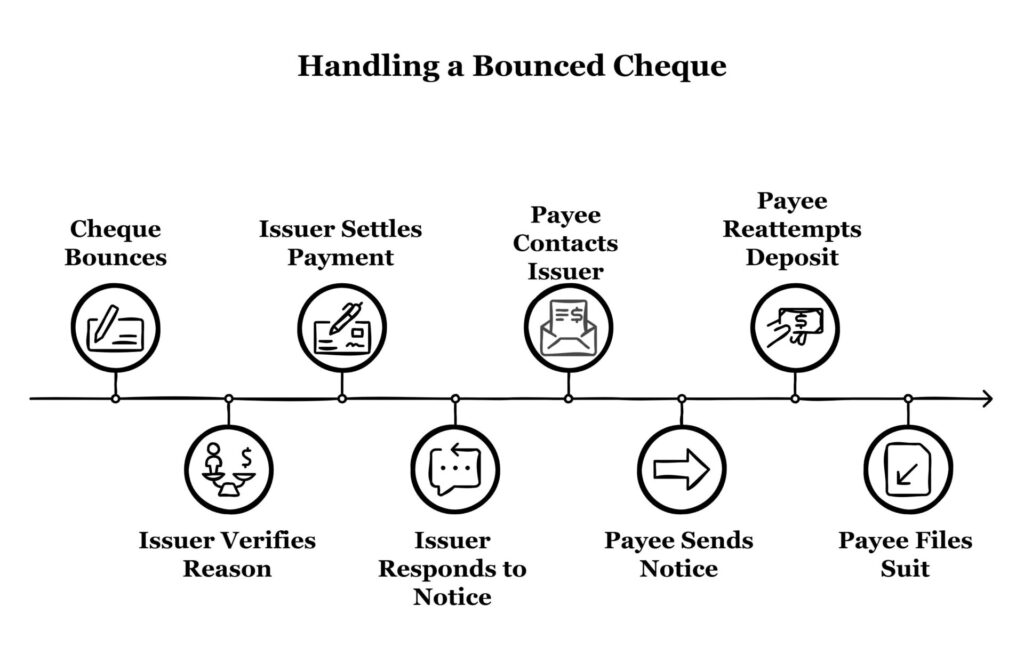
Whether you are the issuer or the receiver, you might be asking, “what if cheque bounce incidents happen to me?” Here is your action plan:
If You are the Cheque Issuer
- Verify the Reason: Check the Return Memo immediately. Was it a signature error or a lack of funds?
- Settle Immediately: If it was due to insufficient funds, contact the payee instantly. Transfer the money via NEFT/IMPS to avoid litigation.
- Respond to Notice: If you receive a legal notice, do not ignore it. Reply within the stipulated time and clear the dues to stop the cheque bounce case process before it reaches court.
If You are the Payee
- Contact the Issuer: Inform them immediately and ask for an alternative payment method.
- Send Legal Notice: If they delay, hire a lawyer to send a Section 138 notice within 30 days.
- File a Suit: If they fail to pay after the notice, proceed to file a case.
Preventive Measures to Avoid Cheque Bounce
Fortunately, you can avoid cheque dishonour and its consequences by following certain preventive measures. Here are a few best practices you can follow to prevent issues.
- If you are the issuer, always ensure that you have sufficient funds in your bank account before issuing a cheque.
- If your account balance is low or insufficient to cover the cheque amount, request the payee to hold out on depositing the cheque.
- Thoroughly verify the cheque details, such as the date, the payee’s name, the amount (both in words and numbers) and signature before issuing.
- Avoid issuing post-dated cheques as much as possible to reduce the chances of rejection.
- Consider making electronic fund transfers through UPI, NEFT, IMPS or RTGS to completely avoid cheque returns and other related risks.
Conclusion
Having your cheque bounced may not be a major issue if it happens once or twice, except that you would have to pay a cheque bounce penalty. However, repeated dishonours and bounced cheques can have serious financial and legal repercussions.
As a matter of fact, a bounced cheque can also negatively impact your credit score if it is issued for loan repayment. This can also affect your ability to avail of loans and other credit facilities in the future.
To ensure your business never faces a cash crunch that leads to bounced cheques, you need reliable working capital. Lendingkart offers fast, collateral-free business loans to help you manage your cash flow effectively. Don’t let a temporary shortage damage your reputation; apply for a business loan with Lendingkart today.
Frequently Asked Questions
1. What is the cheque bounce case time limit for sending a legal notice?
Once the bank informs you that the cheque has been dishonoured, you must send a legal notice to the issuer within 30 days of receiving the ‘Cheque Return Memo’. If you miss this window, the notice may be considered invalid under Section 138 of the Negotiable Instruments Act.
2. Can I present a bounced cheque to the bank again?
Yes. If the cheque was returned due to insufficient funds, and the issuer informs you that the funds are now available, you can re-present the cheque to the bank. However, this must be done within the cheque’s validity period (3 months from the date of issue).
3. Does a cheque bounce affect my CIBIL score?
Yes. This negatively impacts your CIBIL score, significantly reducing your chances of getting loans or credit cards in the future.
4. Where should the cheque bounce case be filed?
According to current regulations, the complaint should be filed in a court that has jurisdiction over the branch of the bank where the payee (the person receiving the money) maintains their account.
Related Articles

Overdue Payment: Meaning, Consequences, and Preventive Steps
Learn the meaning of overdue payments, their consequences on your credit, and practical steps to avoid them.

Cancelled Cheque
Know what a cancelled cheque is, its uses in banking, and how to issue one correctly to avoid mistakes.

GST Full Form & Meaning
Understand the full form and meaning of GST, its components, and its significance in the Indian taxation system.