

Business loans can help expand operations or manage overhead costs, but effective repayment is key to maintaining financial stability. High EMIs can strain cash flow, leading to capital deficits and operational challenges. A well-structured repayment plan optimises interest costs, preserves financial health and strengthens lender relationships for future funding. This guide will help you streamline loan repayments and manage debt efficiently.
What is Business Loan Repayment?
Business loan repayment refers to returning the borrowed funds to the lender within the agreed-upon timeframe. When you take a business loan, the lender sanctions the principal loan amount against a certain rate of interest. As the borrower, you must repay this principal amount, along with the accrued interest within the selected loan tenure. The repayment tenure varies depending on the lender selected and the type of business loan availed. In a nutshell, business loan repayment encompasses the repayment of the principal sum, along with the applicable interest. Timely loan repayments are crucial since they reflect on your creditworthiness as a borrower making it easier to secure lines of credits in the future. Conversely, missed or delayed loan repayments can also result in penalties and a negative impact on your credit score. Therefore, it is important to communicate with your lender and finalise a loan repayment plan that suits your monthly cash flow and does not create a financial burden.
Tips to Repay Your Loan Faster
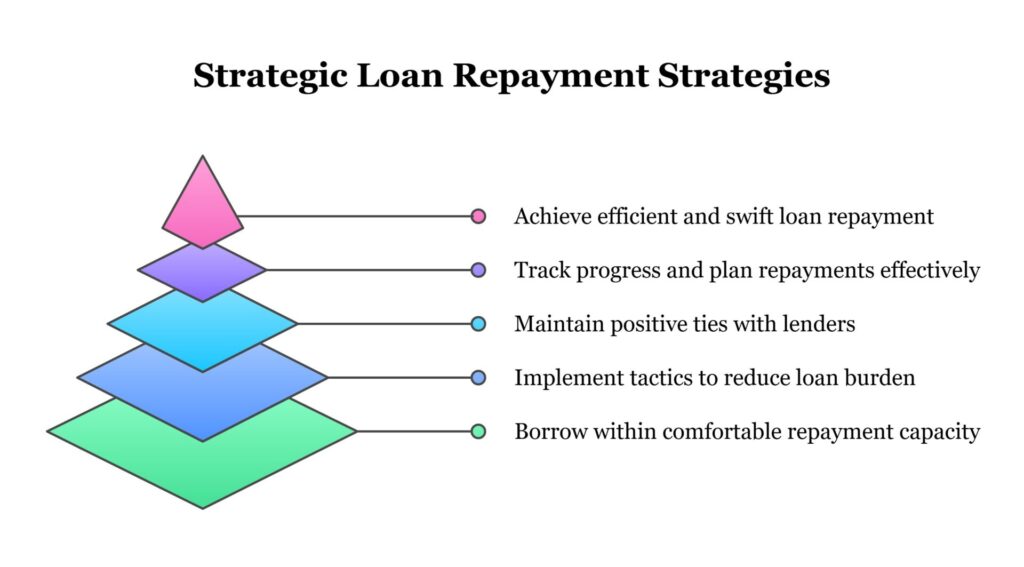
Here’s a list of ways you can simplify and streamline your business loan repayment and reduce your loan burden:
1. Make Partial Payments
You can use surplus cash to make partial prepayments on your business loan products. This reduces your outstanding principal and overall interest burden, therefore shortening the repayment period. However, some lenders impose partial payment fees, sometimes up to 4% if the prepayment amount or set limits on the number of prepayments allowed in a financial year.
2. Increase your EMI Percentage
If your business has steady cash flow, increasing your EMI payments is a powerful way to clear your loan faster. By allocating more funds towards repayment, you reduce the principal amount quicker, which in turn lowers the interest you pay over time. Businesses with seasonal revenue spikes can take advantage of high-earning months by raising EMI payments accordingly.
3. Refinancing your Business Loan
Refinancing allows you to replace your existing loan with a new one that offers repayment terms, such as lower interest rates or revised tenure. This strategy can ease your financial burden and provide flexibility in managing repayments. However, before refinancing, evaluate whether the benefits outweigh potential prepayment penalties imposed by your current lender.
4. Opt for Shorter Repayment Term Loans
While longer loan repayment tenures offer payment flexibility, shorter tenures aid in faster repayment. Shorter tenures speed-up the repayment process and free-up funds which can be used for other purposes. Moreover, term loans with shorter tenures typically incur lower overall interest compared to loans with longer tenures. However, ensure that opting for a shorter tenure does not compromise your liquidity.
5. Maintain a Positive Working Relationship with the Lender
Maintaining a positive working relationship with the lender can go a long way in streamlining business loan repayment management. Timely and EMI payments fosters a positive relationship with the lender, establishing your credibility as a trust-worthy borrower. Similarly, open and regular communication with the lender helps address potential issues early, negotiate favourable loan terms, and ensure future support.
6. Opt for Automated Payments
Setting up automatic transfers ensures you pay your loans on time and avoid penalties. This approach is particularly useful for those managing multiple loans, reducing the chances of missed payments. Aligning payments with your business’s cash flow also prevents financial strain.
7. Borrow What You Can Comfortably Repay
Taking on more than necessary can strain your finances and complicate your business loan application process. Instead, opt for a simple business loan that aligns with your revenue and repayment capacity. This ensures that your repayment schedules remain manageable without impacting daily operations.
8. Use Windfalls Wisely
Unexpected gains, such as profits or tax refunds, can help lower your small business debt. Allocating these funds towards your MSME loan repayments can reduce long-term interest costs. This approach ensures stability during slower business cycles.
9. Create a Realistic Repayment Plan
A structured plan ensures that your business loan terms fit your financial situation. Allocate funds carefully so that your outstanding loan does not interfere with operational costs. A well-managed plan also strengthens relationships with lenders, ensuring better business loan options in the future.
10. Cut Non-Essentual Expenses
Reducing unnecessary expenditures helps in managing your business debt effectively. Cutting costs on non-essential services allows you to allocate more towards your secured business loans. A leaner budget accelerates repayment while maintaining business sustainability.
11. Rework Your Business Budget
Adjusting your budget ensures that loan repayments remain a priority while balancing operational costs. Evaluating expenses allows you to do a business loan apply as per its requirements without financial strain. Seeking professional advice can also optimise your financial planning.
12. Maintain a Contingency Fund
A financial buffer prevents reliance on additional borrowing, particularly an MSME overdraft. Having an emergency fund ensures uninterrupted repayment schedules even during unexpected financial downturns. This proactive approach safeguards both cash flow and loan commitments.
13. Increase Your Profitable Sales
Enhancing revenue is key to repaying a best small business loan efficiently. Identifying a profitable venture and eliminating non-performing products helps maximise returns. More revenue ensures better liquidity, making it easier to meet business loan terms.
14. Review and Prioritise Your Debts
Assessing your liabilities helps manage long term business loans efficiently. Prioritising high-interest loans prevents excessive financial burdens and ensures better management of business loan rates. This strategic approach also improves your overall creditworthiness.
15. Regularly Monitor Your Loan with a Loan Calculator
Tracking repayment progress using a business loan repayment calculator helps make informed decisions. It provides insights into your interest only business loan obligations and overall payment structure. Regular monitoring also allows you to adjust payments and close your loans sooner.
This ensures a structured and strategic approach to managing and repaying online business loans, maintaining financial health and accessing the best business loan options in the future.
How Does Business Loan Repayment Work?
Repayments typically begin a month after disbursement, but terms vary based on lender policies and business loan requirements. Borrowers can choose different repayment structures to suit their financial situation:
- EMI Payments: Pay fixed monthly installments covering both principal and interest until the loan is fully repaid. This structured approach helps manage debt without financial strain.
- Bullet Payments: Pay only interest during the loan tenure and clear the principal in lump sum at the end. Ideal for businesses expecting future cash inflows.
- Prepayment: Pay off your loan early to reduce debt faster, but check for penalties based on partial or full repayment terms set by your lender.
Business Loan Repayment Calculator
A business loan repayment calculator is a digital tool that helps you estimate the monthly EMIs payable on a business loan. You simply need to enter inputs like the loan amount, interest rate, and tenure details to estimate the EMI payable on the loan. Business loan repayment calculators also outline the proportion of principal and interest components in each of your EMI payments. You can also review the loan repayment schedule to understand how the loan balance reduces over time.
If you’re looking to reduce your loan burden, business loan calculators can help. These tools offer a wealth of information including the total interest payable on the loan, how the loan amount impacts your interest rate and EMIs, how changes in tenure impact total interest costs and EMIs, and more. Reviewing these details before applying for a loan helps you make an informed choice. Knowing your EMIs in advance helps you better plan business loan repayments. You can run multiple scenarios with different tenure, loan amount, and interest rate combinations to compare various lenders and select one that best suits your repayment capacity and requirements.
Conclusion
Managing business loan repayments may seem challenging, but the right strategies can simplify the process. Faster repayment frees up funds for growth and reduces interest costs. To streamline debt management, assess repayment options carefully and use Lendingkart’s loan repayment calculator to plan your EMIs effectively.
Frequently Asked Questions
What happens if I don’t repay a business loan?
+
Defaulting on your business loan repayment can result in legal action by the lender. The lender can file a lawsuit against you. If you default on a secured loan, the lender can seize the assets pledged as collateral.
Can I save on interest by refinancing my loan?
+
Yes, you can save on interest payments by refinancing your loan. You can opt for a loan with a lower rate of interest or a shorter tenure to save on the overall interest payment.
Why is timely business loan repayment important?
+
Timely loan repayment is important to build a good credit history and establish yourself as a creditable borrower. A positive credit history ensures easier access to credit against more favourable terms.
Can I foreclose my business loan?
+
Yes, you can foreclose your business loan by paying the entire outstanding loan amount at once before the term ends. However, some lenders may levy a foreclosure penalty, while others may require a minimum number of EMI payments to be made before allowing you to foreclose the loan.
Related Articles

Tips for SME Loan Repayment
Discover effective strategies to manage and repay your SME loans efficiently, ensuring financial stability and business growth.

Business Loan to Start a Business
Learn how to secure a business loan to kickstart your entrepreneurial journey, covering eligibility, documentation, and application process.

Comprehensive Guide to Secured Business Loans
Understand the benefits and requirements of secured business loans, helping you make informed financing decisions for your enterprise.