Access to business loans is crucial for driving growth and addressing the challenges entrepreneurs face in India. These loans empower businesses to expand operations, manage cash flow, and tackle unforeseen hurdles. However, navigating the loan process often presents unique obstacles that require innovative solutions. Understanding common loan problems and their solutions can transform how small businesses approach financing, turning rejections into approvals and uncertainty into strategic growth.
What is a Business Loan and When Do Businesses Need It?
A business loan is a financial tool that helps companies manage expenses, expand operations, hire staff and maintain a steady working capital flow. These business loans can be secured or unsecured and are offered by banks, non-banking financial companies (NBFCs) and fintech lenders to support various business needs.
These loans prove to be essential for managing cash flow gaps, purchasing raw materials, or meeting seasonal demands. For small and medium enterprises (SMEs), business loans in India provide the much-needed financial support to compete in a challenging market. Choosing the right lender, one that aligns with your business’s goals and needs is critical to leveraging the benefits of a business loan effectively.
Understanding the Capital Shortage Crisis for Indian SMEs
Capital shortage remains the single largest obstacle preventing Indian small businesses from realising their full potential. This loan problem stems from systemic issues within traditional lending frameworks that favour large corporations while excluding smaller enterprises.
The impact of this shortage is far-reaching:
- Delayed expansion plans and missed market opportunities
- Inability to adopt new technologies or upgrade equipment
- Difficulty in retaining skilled employees due to cash flow constraints
- Reduced competitiveness against well-funded competitors
- Higher dependence on costly informal credit sources
Understanding the specific barriers that create this shortage is the first step towards finding effective solutions.
Lack of Collateral
Small and new businesses often face hurdles due to the absence of tangible assets to pledge as collateral. Indian lenders usually require properties like land, machinery, or real estate to secure a loan. For a business loan small business startups operating from rented premises or co-working spaces, meeting this requirement becomes virtually impossible.
Startups and micro-enterprises with limited resources may not have such assets. Lack of security often leads banks to view their loan application as high-risk, resulting in rejection or higher interest rates. Many businesses are forced to seek alternative funding options that may not be ideal for their needs.
Fortunately, the emergence of unsecured business loans and government-backed credit guarantee schemes like CGTMSE has begun addressing this barrier, enabling more entrepreneurs to access capital based on business viability rather than asset ownership.
Unaffordable Interest Rates
Indian financial institutions often classify small and medium-sized enterprises (SMEs) as high-risk borrowers. They impose high interest rates, which can severely impact the cash flow of these businesses. Traditional banks may charge 12-18% per annum, while some NBFCs levy even higher rates, making the effective cost of borrowing prohibitive for businesses with thin profit margins.
Affordable lending options can help ensure financial stability and foster growth among SMEs. Easy business loans from fintech lenders with competitive rates offer a viable alternative, with transparent pricing and no hidden charges that can derail financial planning.
Lengthy Procedures
The traditional loan application process in India is time-intensive. It often involves detailed scrutiny of financial statements, business plans, and creditworthiness. Multiple visits to the bank and endless document submissions.
Such prolonged timelines can discourage businesses from applying for loans altogether. A simplified and digitalised process could make loans more accessible and reduce disruptions to daily operations. Digital-first lenders now offer approvals within 72 hours, with entirely online applications that can be completed from a smartphone, fundamentally transforming the borrowing experience.
Low Credit Score
A low or insufficient credit score is a common roadblock for small businesses in India. Often, entrepreneurs lack awareness about maintaining a good credit history or may have a poor track record due to inconsistent repayments. Many small business owners don’t realise that personal credit scores, business credit scores, and even GST compliance history all factor into lending decisions.
Alternative credit assessment models that consider GST returns, bank statement analysis, and digital footprints are helping businesses with lower traditional credit scores access easy business loans.
Insufficient Funds Available
Even when loans are approved, the sanctioned amount is often insufficient to meet the actual needs of Indian businesses. Lenders may take a conservative approach, especially when funding startups or small enterprises, fearing repayment risks. This mismatch between the approved loan amount and business requirements can hinder critical growth plans, such as expanding operations or upgrading equipment.
Improved risk assessment by lenders can bridge this funding gap effectively. Modern data analytics and alternative lending models enable more accurate evaluation of business potential, allowing lenders to offer adequate funding amounts that genuinely support business objectives.
Is SME Loan the Ideal Solution for Business Growth?
Small and medium enterprises (SMEs) often face financial challenges that hinder growth. An optimal way to overcome these hurdles is by securing an SME loan, which provides the necessary capital to sustain and expand operations. Under the MSMED Act of 2006, enterprises that meet specific criteria can qualify for financing.
| Enterprise Type | Investment in Plant & Machinery / Equipment | Annual Turnover |
| Micro | Not more than ₹2.5 crore | Not more than ₹10 crore |
| Small | Not more than ₹25 crore | Not more than ₹100 crore |
| Medium | Not more than ₹125 crore | Not more than ₹500 crore |
When you need a business loan quickly, you can opt for lenders who offer an online business loan, making it easier for SMEs to access funds with minimal paperwork.
One Solution for Your Business Loan
Unlike traditional banks, non-banking financial companies (NBFCs) offer flexible and innovative financial solutions tailored to the needs of small and medium enterprises (SMEs). Lendingkart is one such leading NBFC which specialises in providing accessible and hassle-free business loans to entrepreneurs. Some of the advantages of obtaining loans for Lendingkart are:
- No Collaterals Required: Lendingkart offers unsecured loans, so businesses can secure funding without pledging assets as collateral. This eliminates the risk of losing valuable property in case of repayment challenges. It provides equal opportunities for startups and small businesses to access credit.
- Fast Processing: Lendingkart ensures small business loans are processed and disbursed within 72 hours. It provides entrepreneurs with quick access to funds unlike other business loans India. This rapid timeline allows businesses to act on critical opportunities without delays. It also eliminates the frustration of long waiting periods with traditional lenders.
- Transparent Loan Process: Lendingkart’s loans come with competitive interest rates starting at 1.25% per month, ensuring affordability. Clear terms and conditions eliminate hidden charges, providing businesses with financial clarity. This transparency helps entrepreneurs plan their finances confidently and focus on growth.
- Convenience at Your Fingertips: Businesses can apply for loans online through Lendingkart, simplifying the process significantly. Entrepreneurs no longer need to visit bank branches or navigate lengthy documentation processes. This digital-first approach saves time and enhances convenience for busy business owners.
What is Business Loan Eligibility?
Before you apply for working capital, it is crucial to evaluate your financial standing. Lenders assess multiple factors before approving a loan application.
- Credit score: A strong credit score increases your chances of approval. It reflects your ability to manage debt responsibly.
- Time in business: Most lenders require at least three years of operational history.
- Annual revenue: Meeting the lender’s revenue threshold is essential for loan approval.
Understanding these factors can help business owners avoid reasons for business loan rejection and improve their chances of securing a loan.
Business Loan Approval Tips
For businesses looking for quick financing, these strategies can help overcome MSME financing hurdles:
- Improve Your Business Credit Score: A strong credit history boosts your chances of securing a loan and avoids small business loan rejection solutions.
- Ensure Positive Cash Flow: Lenders prefer businesses with steady revenue to reduce the risk of defaults.
- Select the Right Loan Amount: Use a business loan EMI tool to determine a feasible repayment plan.
- Pay Off Existing Debt: Reducing liabilities can enhance eligibility by improving your financial profile.
- Compare Lenders Carefully: Avoid multiple applications at once, as it can negatively impact your creditworthiness.
By fixing business loan application issues, SMEs can find the best ways to secure a business loan and achieve financial stability.
What are the Steps for a Business Loan Application?
When you need a business loan, you have to successfully qualify for it. Follow this step-by-step process in order to apply for one:
- Identify funding needs and choose between working capital business loans or other financing options.
- Collect necessary documents such as financial statements and tax returns.
- Research and compare lenders, considering tools such as business loan EMI calculator to estimate costs.
- Submit a complete and accurate application.
- Await lender verification and approval.
- Discuss loan terms, including interest rates and repayment schedules.
- Upon approval, receive the loan amount in your account.
Proper preparation increases the likelihood of business loan approval chances in your favour.
Conclusion
Business loans help Indian enterprises manage expenses and drive growth. However, traditional lending barriers like high interest rates and collateral can limit access. Fintech solutions like Lendingkart offer fast, collateral-free loans with transparent terms, bridging this gap. Empower your business with Lendingkart and unlock opportunities for sustainable growth.
Whether you’re seeking a small business loan or one that doesn’t demand months of waiting, modern lending platforms have transformed the landscape. Empower your business with Lendingkart and unlock opportunities for sustainable growth.
1. What are the most common challenges small businesses face when applying for a business loan in India?
* Lack of collateral to secure loans.
* High interest rates that impact cash flow.
* Lengthy and complex application processes.
* Low or poor credit scores, reducing loan eligibility.
* Insufficient loan amounts that fail to meet business requirements.
These barriers can delay or restrict access to much-needed working capital.
2. How can Lendingkart help solve business loan challenges for small and medium enterprises (SMEs)?
* Collateral-free loans, reducing risk for startups.
* Quick disbursal within 72 hours, allowing faster decision-making.
* Transparent interest rates starting at 1.25% per month, with no hidden charges.
* 100% online loan application process, saving time and paperwork. This makes it easier for SMEs to secure loans tailored to their financial needs.
3. What are the eligibility criteria for getting a business loan with Lendingkart?
* A minimum 3 years of operational history.
* A healthy credit score reflecting responsible financial behavior.
* Proof of consistent annual revenue. Meeting these criteria improves your business loan approval chances and helps avoid rejection.
4. What strategies can improve a business’s chances of loan approval?
* Boost your credit score by maintaining timely repayments.
* Ensure stable cash flow to demonstrate repayment ability.
* Reduce existing debt to improve creditworthiness.
* Choose a realistic loan amount using a business loan EMI calculator.
* Compare lenders before applying to find the most suitable offer without hurting your credit score.
5. When is an SME loan the right solution for business growth?
* You need funds for expansion, equipment purchase, or working capital.
* You’re a registered small or medium enterprise under the MSMED Act.
* You want quick, paperless access to credit with minimal conditions. Online SME loans from NBFCs like Lendingkart are tailored to support scalable and sustainable business growth.
Related Articles
Self-Employed Loans: Challenges and Solutions
Understand the common challenges faced by self-employed individuals when applying for business loans and learn practical solutions.
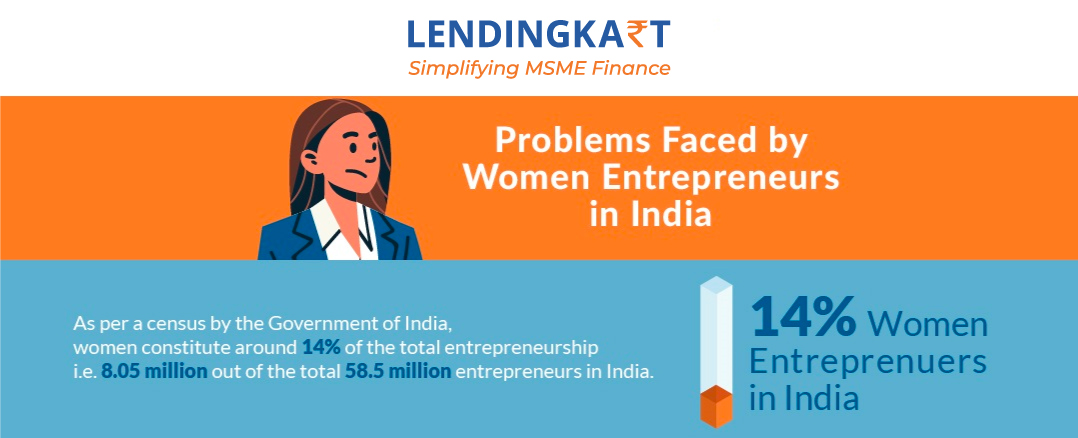
Problems Faced by Women Entrepreneurs in India
Explore key barriers that women entrepreneurs face in India along with actionable insights to overcome those challenges.

Business Loans to Start a New Business
Learn how to apply for business loans in India and fund your startup with flexible terms and minimal paperwork.