The Reserve Bank of India is pushing every bank in India to adopt Unified Lending Interface (ULI), a new digital system built to make business loans faster and far less painful to apply for. Instead of waiting weeks for a bank to manually verify your documents, ULI lets the verification process be done entirely digitally in minutes. What this really means is that small businesses can now get loans without submitting thick files of paper or running around bank offices.
What Exactly Is the ULI System and How Does It Speed Up Your Loan?
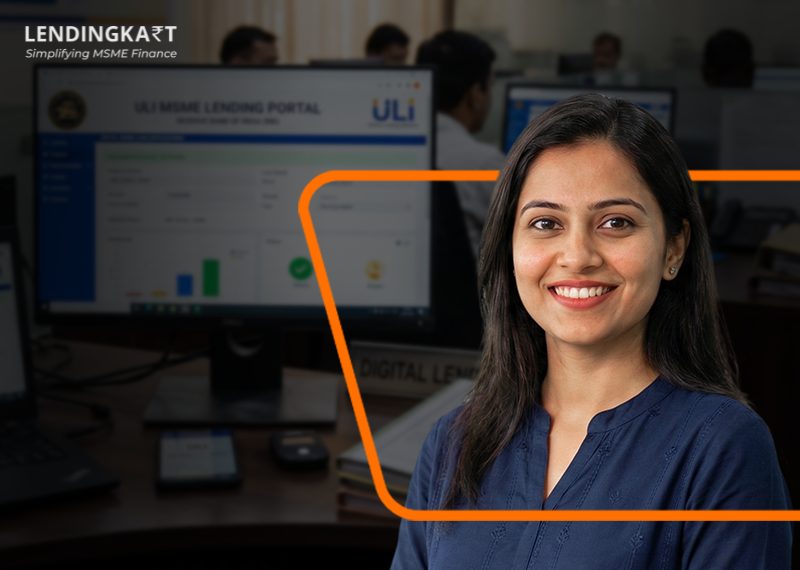
Unified Lending Interface (ULI) is a secure digital platform that connects banks directly to government databases, such as GST, Aadhaar, and land records, so your documents are verified online rather than in person.
When you apply for a loan, you give the bank your digital consent to instantly check these records. So there is no need to collect statements, print tax returns, or carry folders into a branch. Instead of you bringing paperwork to the bank, the bank looks up your data online, with your permission, through a secure network. It pulls your tax filings and bank statements directly, which cuts down the time a bank needs to review your application.
This also makes the process cheaper for banks, which in turn makes it worth their while to offer smaller loans to shops and micro-businesses that were often overlooked before.
Why Is the RBI Pushing Banks Toward RBI Digital Lending?
The RBI wants banks to adopt RBI Digital Lending because millions of small businesses still struggle to get approved by traditional lenders. The usual process takes too long, involves too much paperwork, and costs banks more to process than it’s often worth for a small loan.
Traditional lending has historically underserved small business owners. Banks often ask for property as collateral or reject applications outright simply because the loan size is too small to justify the manual effort. The RBI wants to shift that. Under this new framework, banks are encouraged to review your actual sales and cash flow online, rather than relying entirely on property ownership. Lenders that hold off on adopting this shift risk losing customers to those who move faster, since most business owners today would rather apply online than visit a branch for weeks.
How Does This New System Help Small Business Owners Get Capital?
This system helps by removing the burden of gathering physical financial records, tax papers, and property documents just to apply for a loan. Your loan decision comes together in a few clicks, so you’re less likely to miss a time-sensitive business opportunity while waiting on paperwork. It also means businesses that don’t own land or commercial property can still qualify for a loan, based purely on their regular monthly sales.
Getting a business loan starts to feel like a quick online task rather than a drawn-out chore. Here’s what changes in practice:
- No more paper files: You don’t need to print months of bank statements or tax forms.
- Lower costs: Since banks save money by processing everything digitally, some of those savings are passed on to you in the form of better rates.
- Loans based on sales: Lenders can check your current GST data to map your monthly turnover, rather than requiring property as collateral.
- More choices: Smaller lenders and NBFCs can access your verified data just as easily as large banks, giving you more options to choose from.
What Kind of Information Can Lenders See Through the ULI Network?
Lenders can see your basic identity details, tax history, monthly sales, and bank account summaries through the ULI network, all pulled together from trusted sources such as the GST portal, credit bureaus, and DigiLocker, on a single screen.
This means a bank doesn’t need to send someone to physically inspect your office just to confirm your paperwork is genuine. The platform checks different data depending on the loan type. For instance, it cross-checks your PAN against your Aadhaar to prevent identity fraud and reviews your bills and bank transactions to verify your income. All of this happens quickly in the background, and your data stays private throughout while still giving the bank sufficient evidence that your business is running well.
Conclusion
The RBI’s push toward this digital network is changing how small businesses access funding for their day-to-day operations. Moving away from slow, paper-heavy processes helps keep your business running and ready for new orders. At the end of the day, relying on online financial systems protects your cash flow and lets you grow without unnecessary friction.
At Lendingkart, we already operate on this kind of modern digital lending infrastructure, built from the ground up for speed. Business owners can start a 100% digital application process that skips the usual bureaucratic delays. We offer collateral-free business loans to keep your operations moving without putting personal or business assets on the line. With minimal documentation requirements, there’s no need for endless paperwork or complex compliance checks. Our repayment options are built around your seasonal cash flow, so your monthly instalments work in perfect sync with your business cycle.
Read More: FM Sitharaman Launches New SIDBI Initiatives to Support MSME Growth
Frequently Asked Questions
- Does ULI transfer loan money directly to my bank account?
No, ULI isn’t a payment system. It’s a secure digital pathway that shares your verified business data with banks, so they can approve your loan faster.
- Can a bank look at my business data without my permission?
No. The system requires your explicit digital consent before any bank can access your records. Your data stays private, and no lender can check your tax or bank details without your approval.
- How does this digital system help a farmer who doesn’t have a formal credit score?
It works by showing the bank your regular GST sales and utility bill payments instead of relying on a traditional credit score. This alternative data gives lenders enough confidence in your business’s health to approve a loan.
- Will ULI make it easier for a local business with no prior loan history to get approved?
Yes. Since ULI relies on verified GST filings, bank transactions, and utility payments instead of past credit history, a business with no formal loan record can still show lenders it’s financially active and creditworthy.
- Do I need to apply separately on the ULI platform to get a loan?
No. ULI works in the background as infrastructure that banks and lenders plug into. You apply for a loan directly to your chosen lender, and that lender uses ULI to verify your data more quickly.