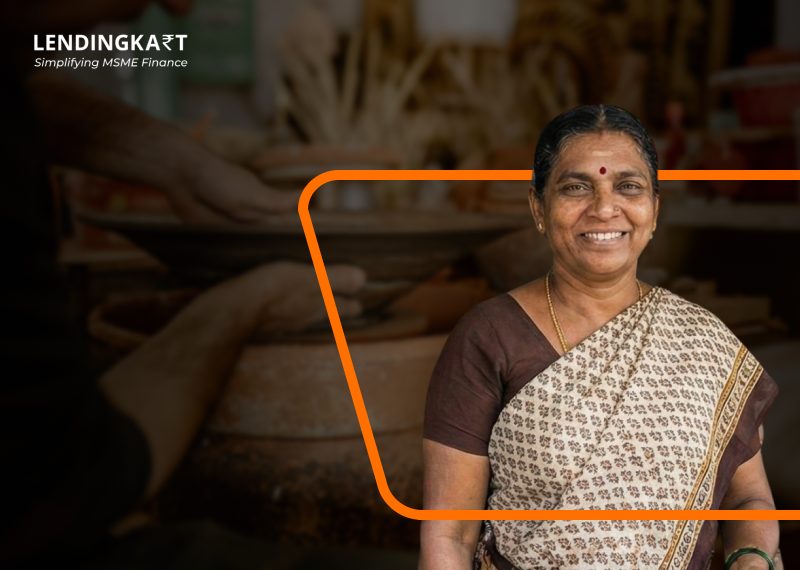
Responsible Lending at LendingKart: Fair Credit for MSMEs
7 min read
Responsible Lending at LendingKart: Fair Credit for MSMEs
In India, Micro, Small, and Medium Enterprises (MSMEs) are the backbone of the country’s economic growth, generating employment and contributing significantly to the GDP. However, accessing credit has often been a significant challenge for such enterprises, especially for startups and small-scale businesses. This is where responsible lending plays a transformative role. At LendingKart, responsible lending […]
With increasing digitisation of financial services, the CKYC regime simplifies routine identity verification. Once your KYC details are registered in the Central KYC Records Registry (CKYCRR), managed by CERSAI, you get a unique CKYC number that can be used across banks, mutual funds, insurance companies and other regulated institutions, without submitting physical documents each
The Goods and Services Tax (GST) system plays a significant role in the financial ecosystem of businesses. It standardises indirect taxation and ensures transparency across supply chains. However, the effectiveness of this system depends heavily on timely GST filing. What seems like a minor administrative delay can result in financial penalties, blocked funds, operational
Understanding the income tax slab is essential for effective tax planning. The Indian Government’s new tax regime continues as the default option, offering simplified compliance and lower income tax rates for many taxpayers. Even after the Union Budget 2026, the income tax slab rate structure under both regimes has largely remained unchanged, giving stability
Ratio analysis is a method of evaluating a business’s financial health by analysing numerical relationships between items in financial statements, such as the balance sheet, profit and loss account, and cash flow statement. These relationships are expressed as financial ratios that highlight how well a business is performing, both over time and compared to
Agriculture in India comes with several uncertainties. Rising cultivation costs, changing weather conditions, unstable crop prices, and limited access to formal credit often create financial stress for farming families. To reduce some of this pressure, the Government of India launched the Pradhan Mantri Kisan Samman Nidhi scheme. Over time, PM Kisan has become one
What is GST Rate System in India? India’s tax landscape changed fundamentally in July 2017 when the Goods and Services Tax replaced a complicated web of central and state levies, including VAT, excise duty, and service tax, with a single unified indirect tax system. At the heart of this system are the GST rates